
Stop the War
Scenes from a Divided America, 2000 – 2006
This set of images evolved over a six-year period that witnessed America’s confrontation with the visceral issues of politics and war at the turn of millennium. I began photographing during the disputed presidential election of 2000 when demonstrations occurred almost weekly at the State Capital in Sacramento. I continued to observe, casually at first, then more and more purposefully, as succeeding events increased the emotional intensity: the attacks of September 11, 2001; the war in Afghanistan; the invasion of Iraq.
I was moved by the diverse moods and emotions of committed individuals who were drawn, almost compulsively, into the public arena to express their passionate beliefs. I saw anger, pride, humor, sadness, hope, and love. I have tried to convey some of those emotions in these photographs.
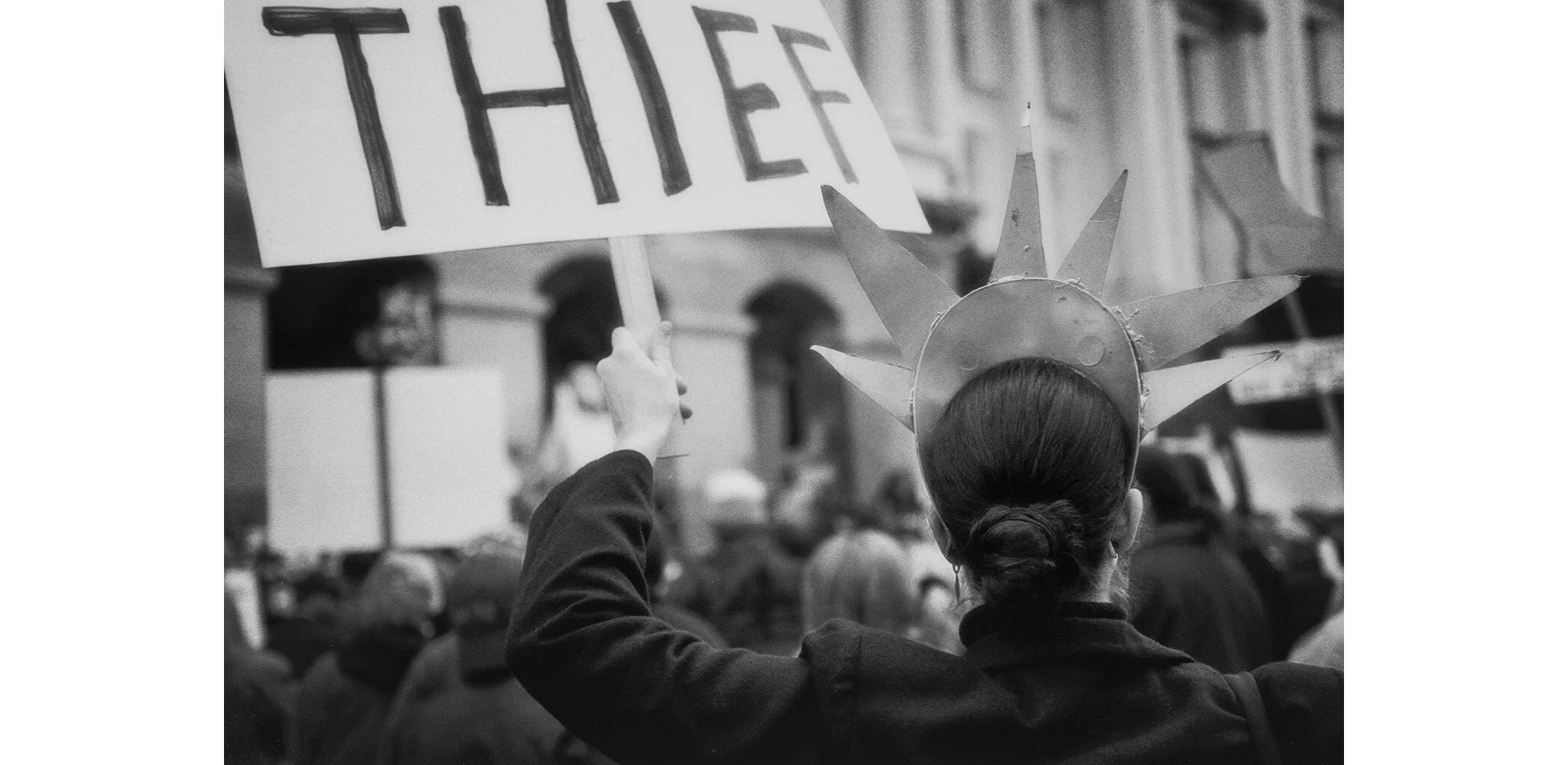
The contested presidential election of 2000 served as an ominous opening to the new millennium. At a counter-inaugural demonstration in January 2001, people expressed anger and outrage at a hallowed process gone wrong. Something was in the air; danger lurked; war clouds gathered. A palpable feeling held the crowd - democracy had been compromised....
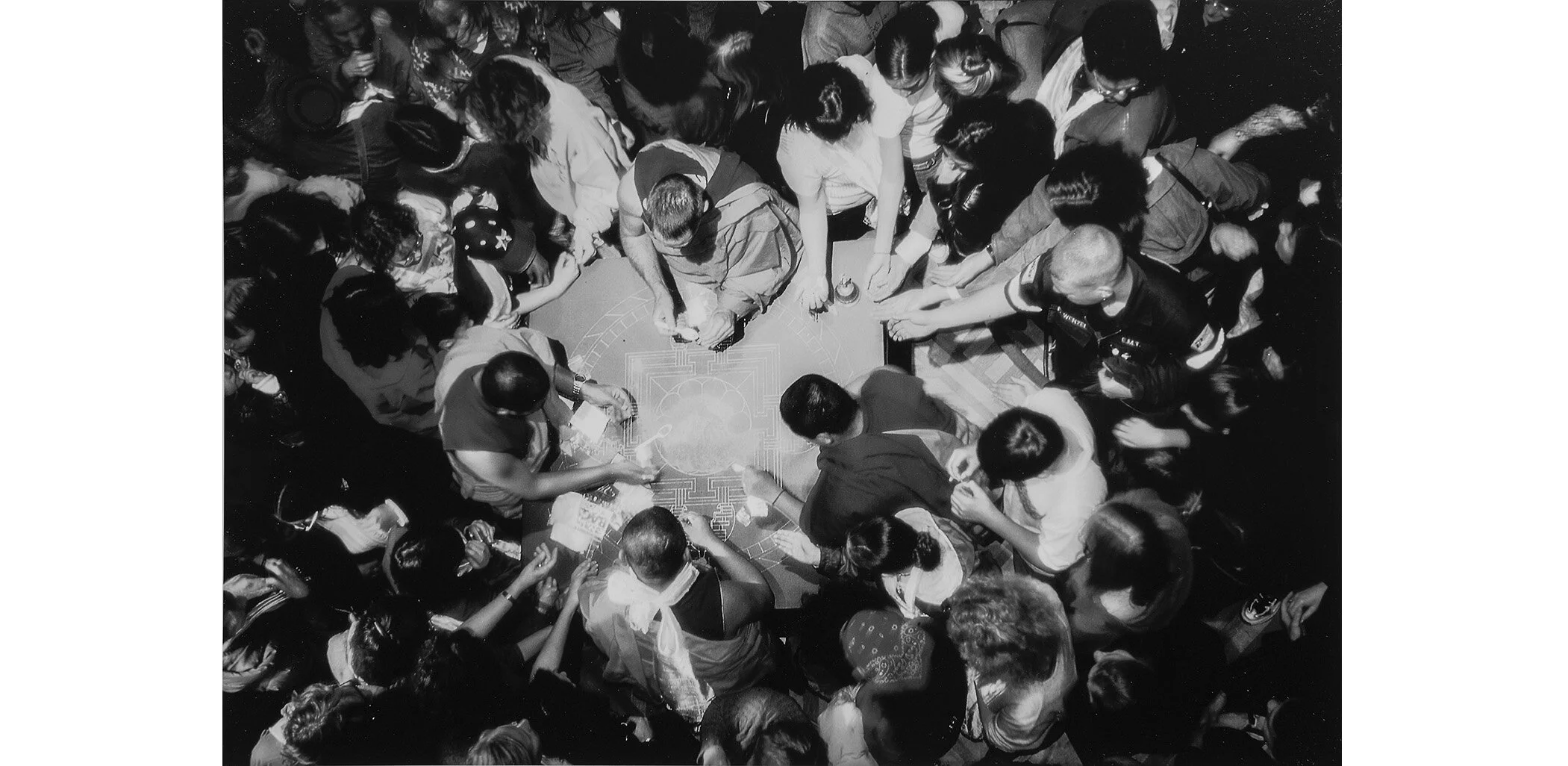
A group of Buddhist monks came to Sacramento in January 2002 to perform a sand mandala peace ritual. The impact of the recent events of September 11, 2001 weighed heavily on hearts and minds. The United States government had just launched the invasion of Afghanistan. The main ballroom of the Crocker Museum was packed for the closing ceremony as the monks ... MORE-->
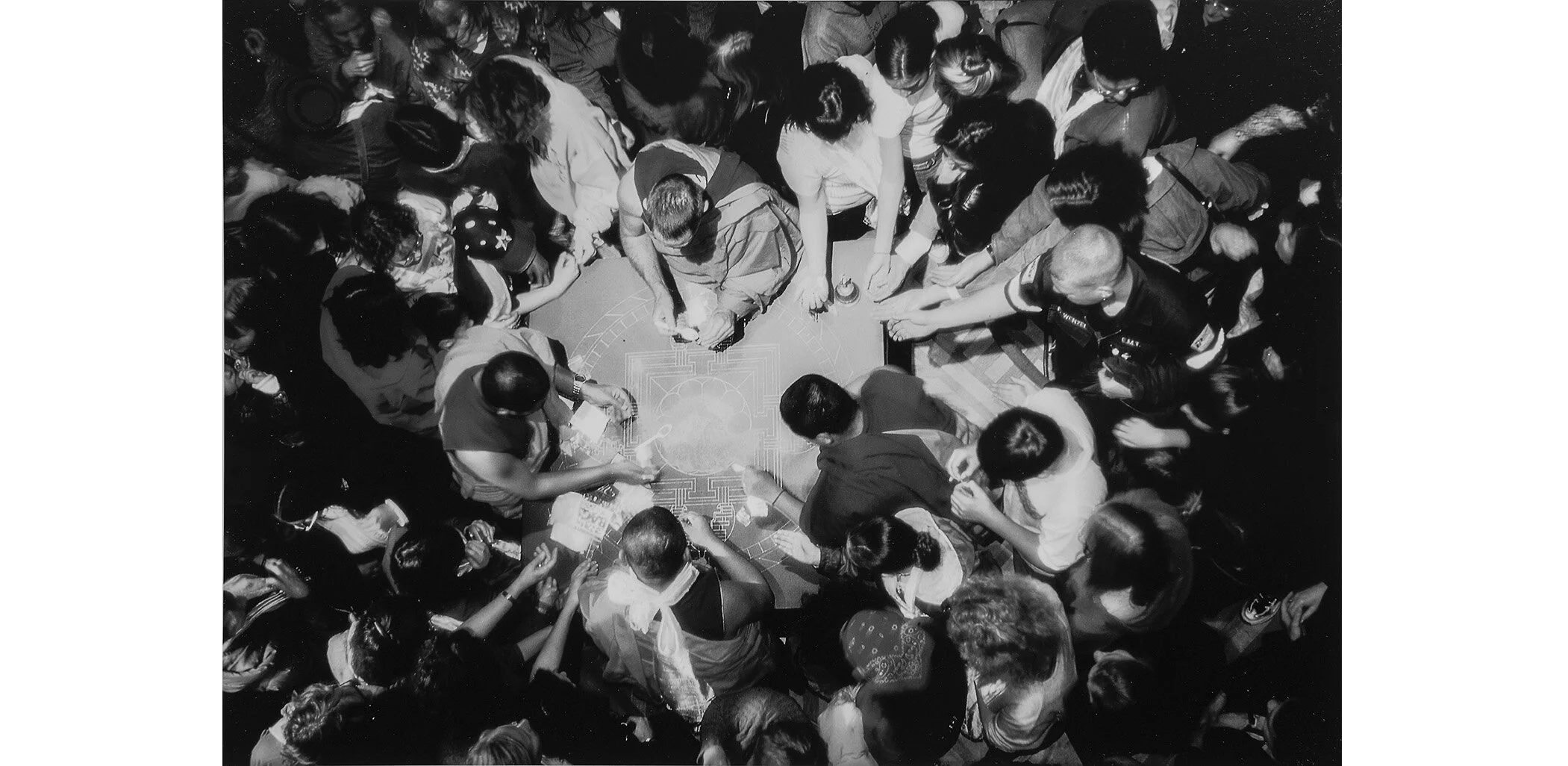
...the sand painting and prepared to cast it into the Sacramento River - a symbolic evocation of the impermanence of all things. Onlookers pressed around the table to receive small token baggies of sand. Peace activists greeted each other somberly throughout the afternoon. “We need this now, more than ever,” one said.
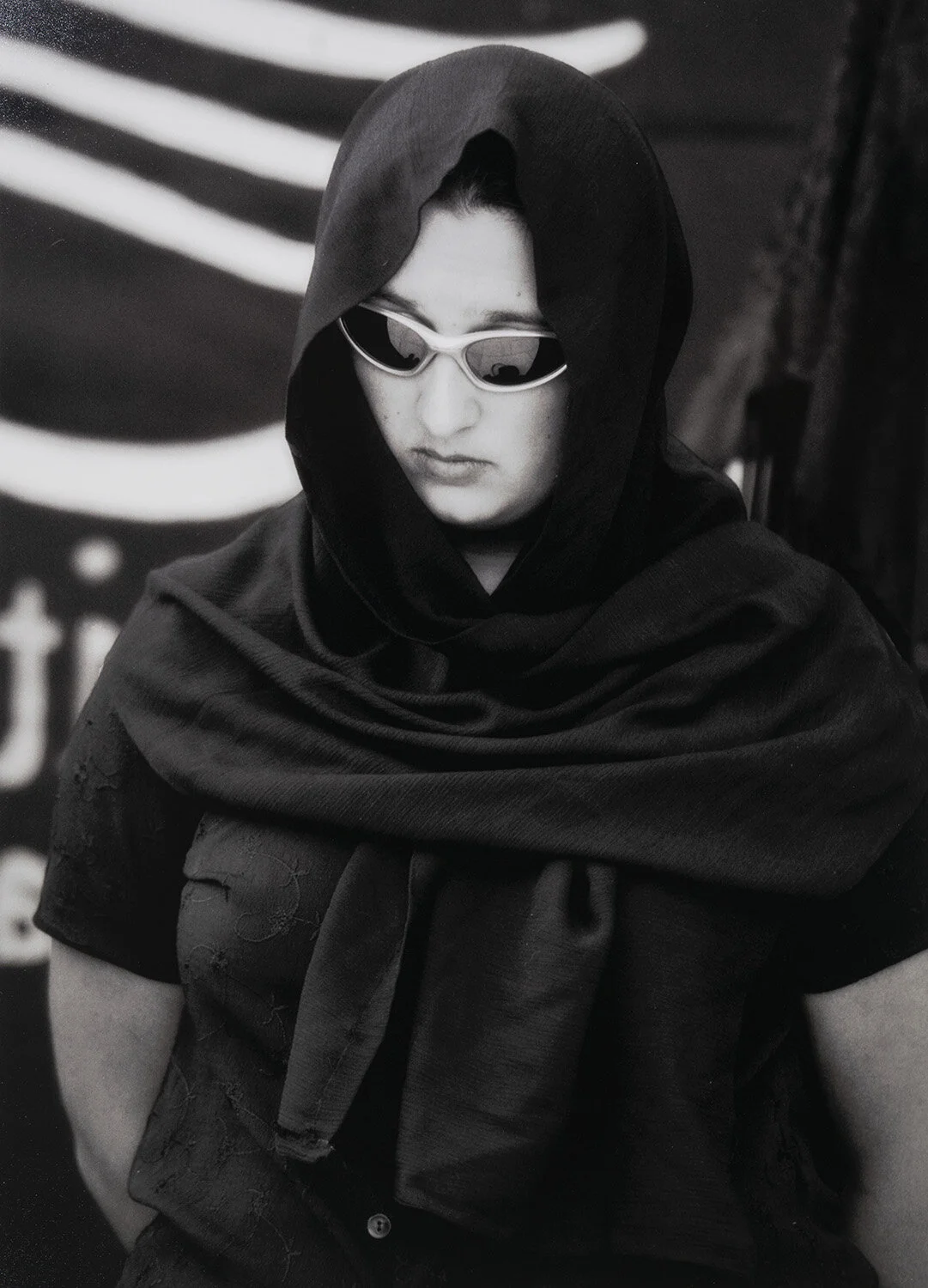
On the six-month anniversary of September 11, local activists held a day-long vigil on the west steps of the Sate Capital in Sacramento. The day was punctuated by the appearance of the Women in Black who stood as anchors in the gathering storm - grounded, silent, unmoving witnesses to the horrors of war.
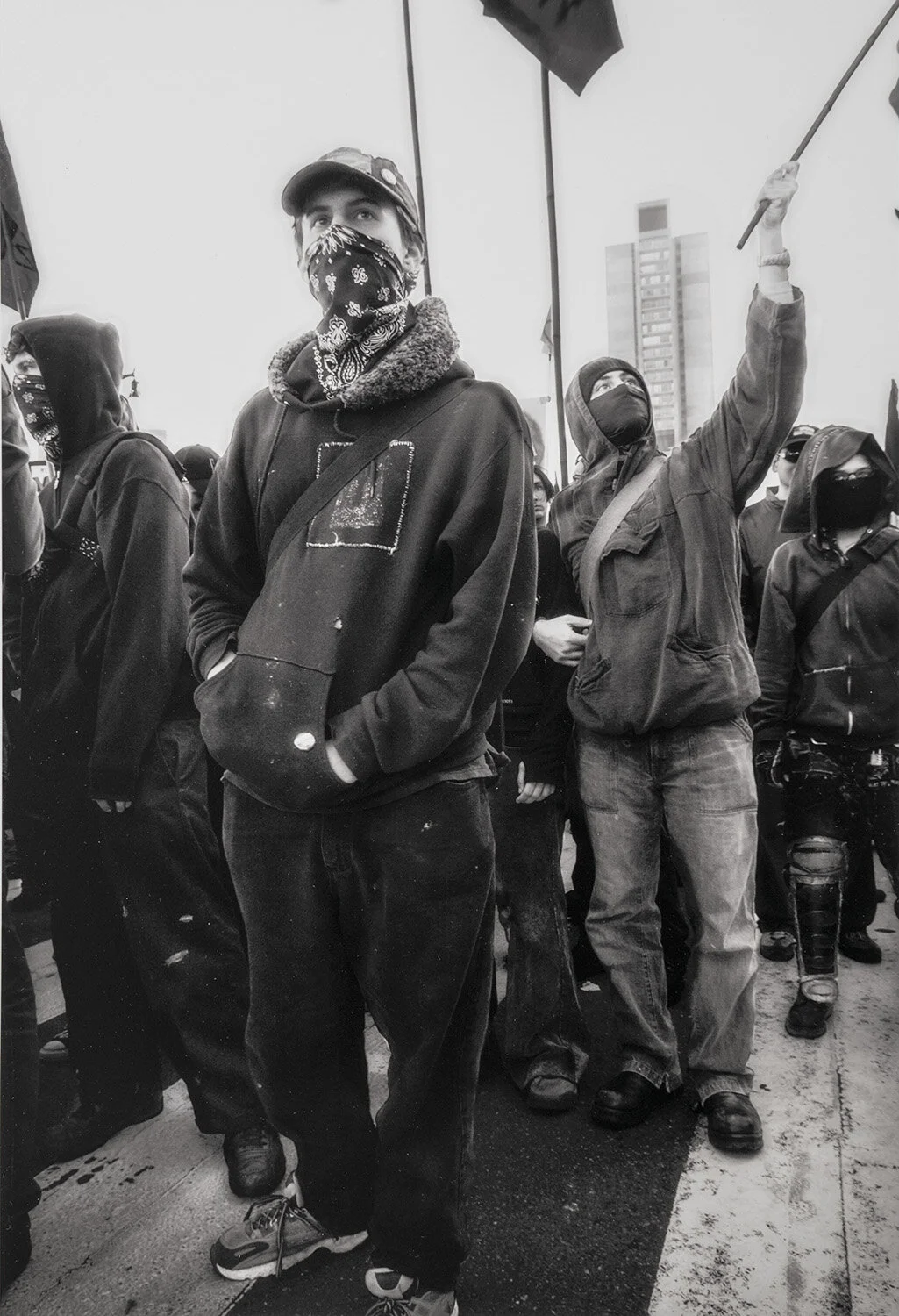
A group of anarchists prepare to march in San Francisco, January 2003. Standing tall in sneakers and sweatshirts, their faces are covered against the police security cameras filming from the tops of buildings nearby.
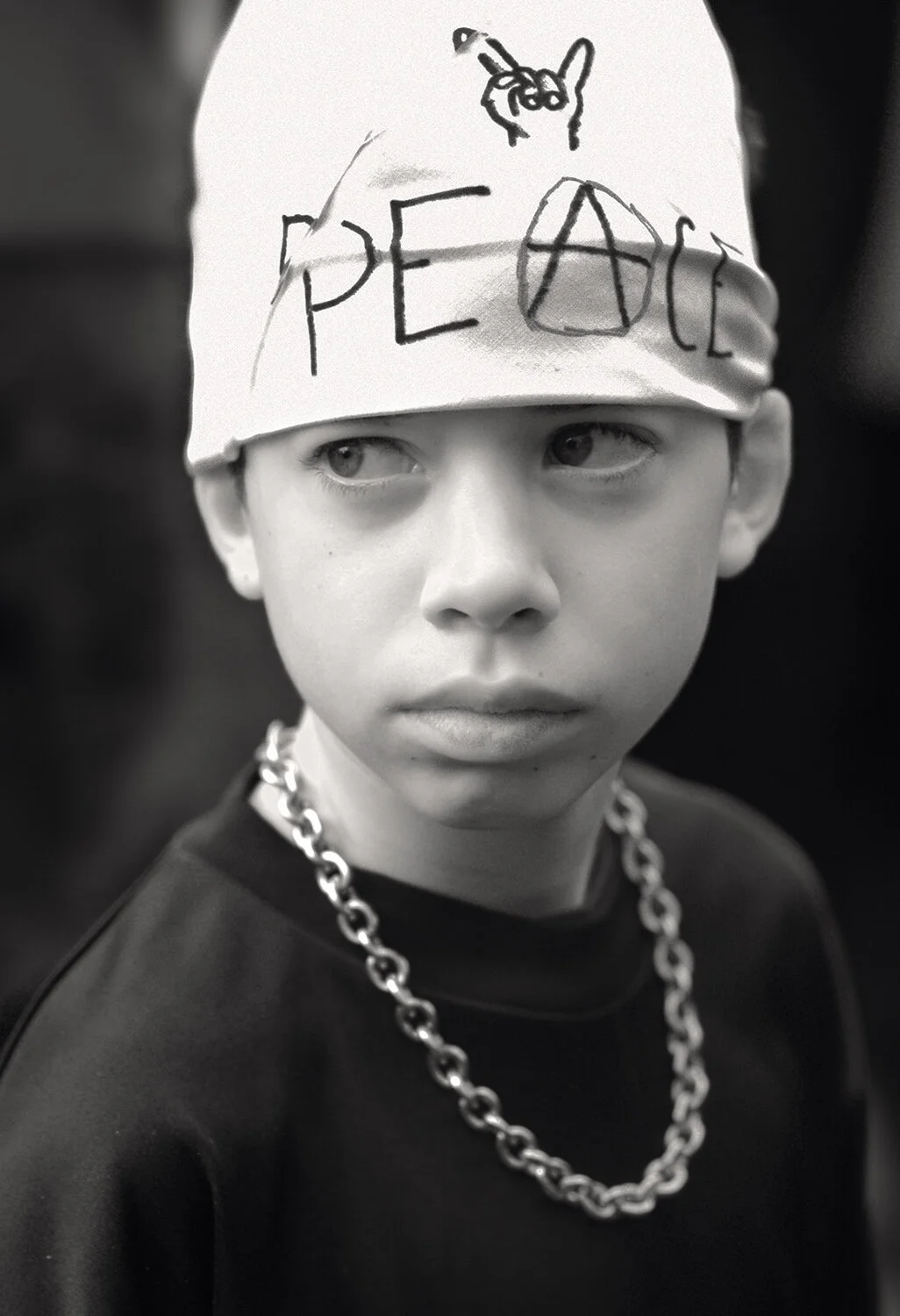
A young demonstrator, dressed completely in black except for his decorated cap, strikes a militant pose in contrast to the more muted mood of the Women in Black. His wandering gaze expresses ambivalence toward a future threatened by adults; an incipient defiance tempered by the innocence of youth.
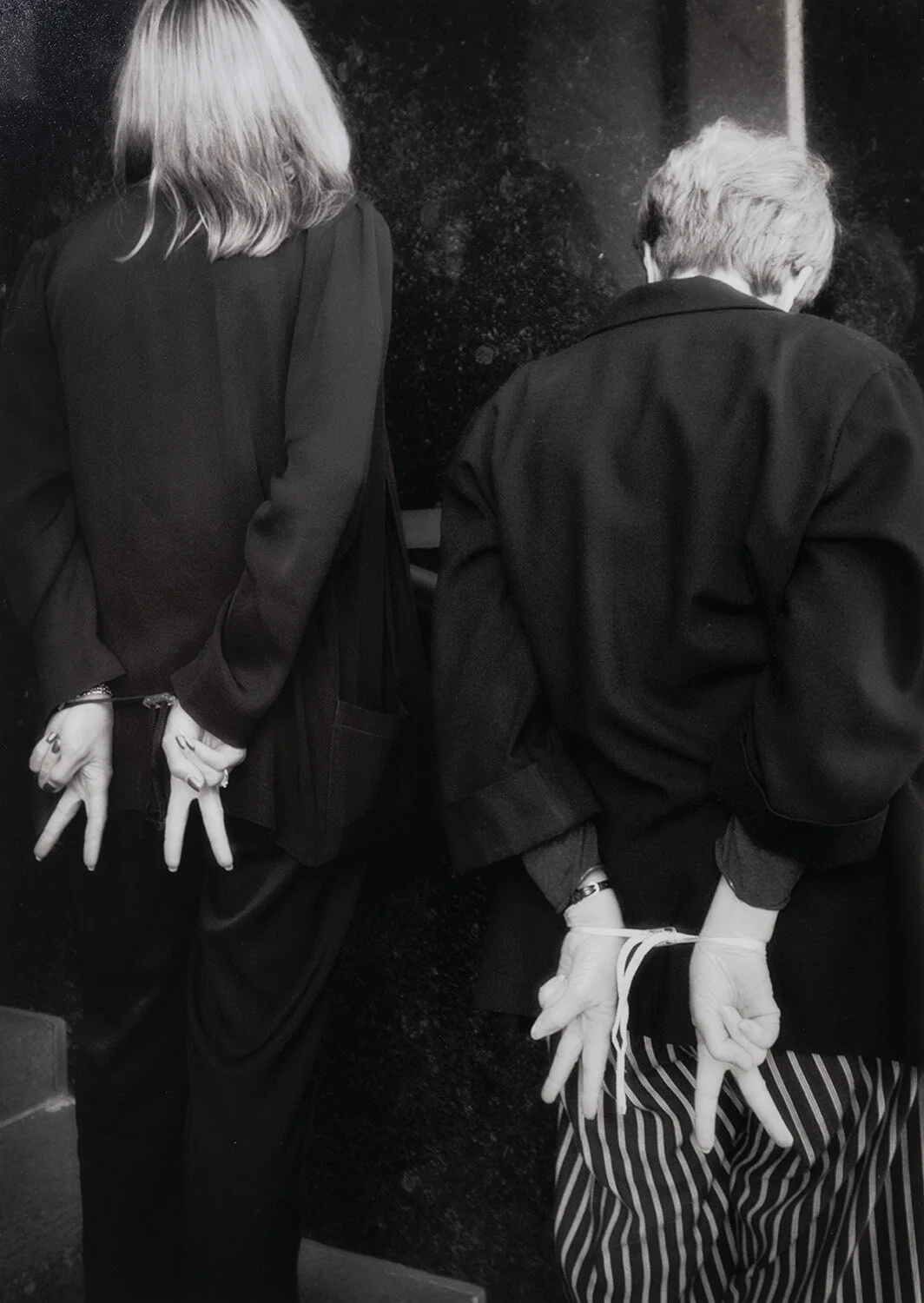
Arrested peace activists await transport to city jail after attempting to blockade the entrance to the Federal Building in Sacramento, March 2003. In an act of continuing witness, they flash the peace symbol with their cuffed hands to supporters behind them.
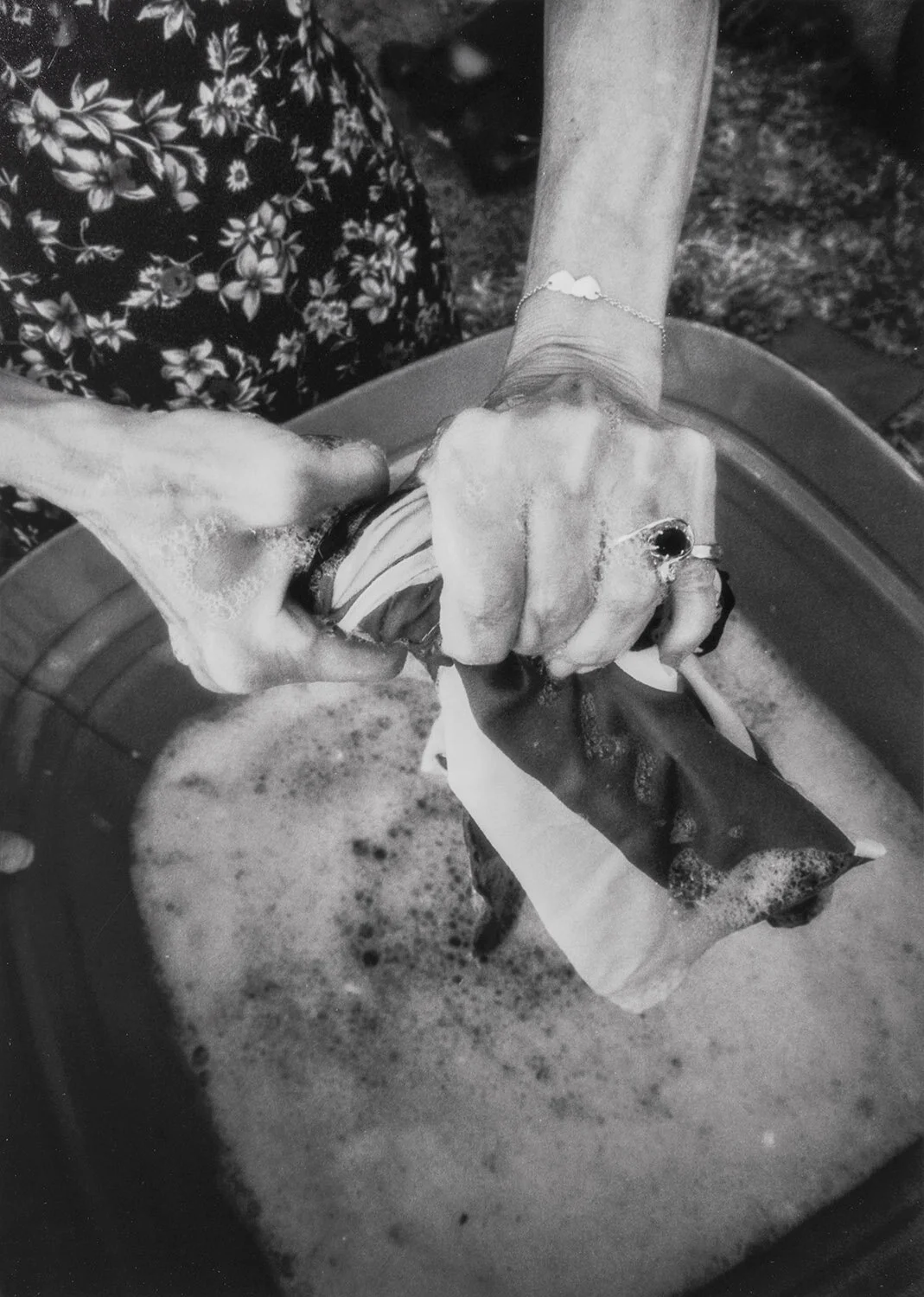
A woman set up a wash basin at public demonstrations and spent the entire time washing several U.S. flags, setting each carefully out to dry on a make-shift rack nearby. “We must wash the filth and lies out of the flag,” she said. “This is our flag too. We must reclaim it.”
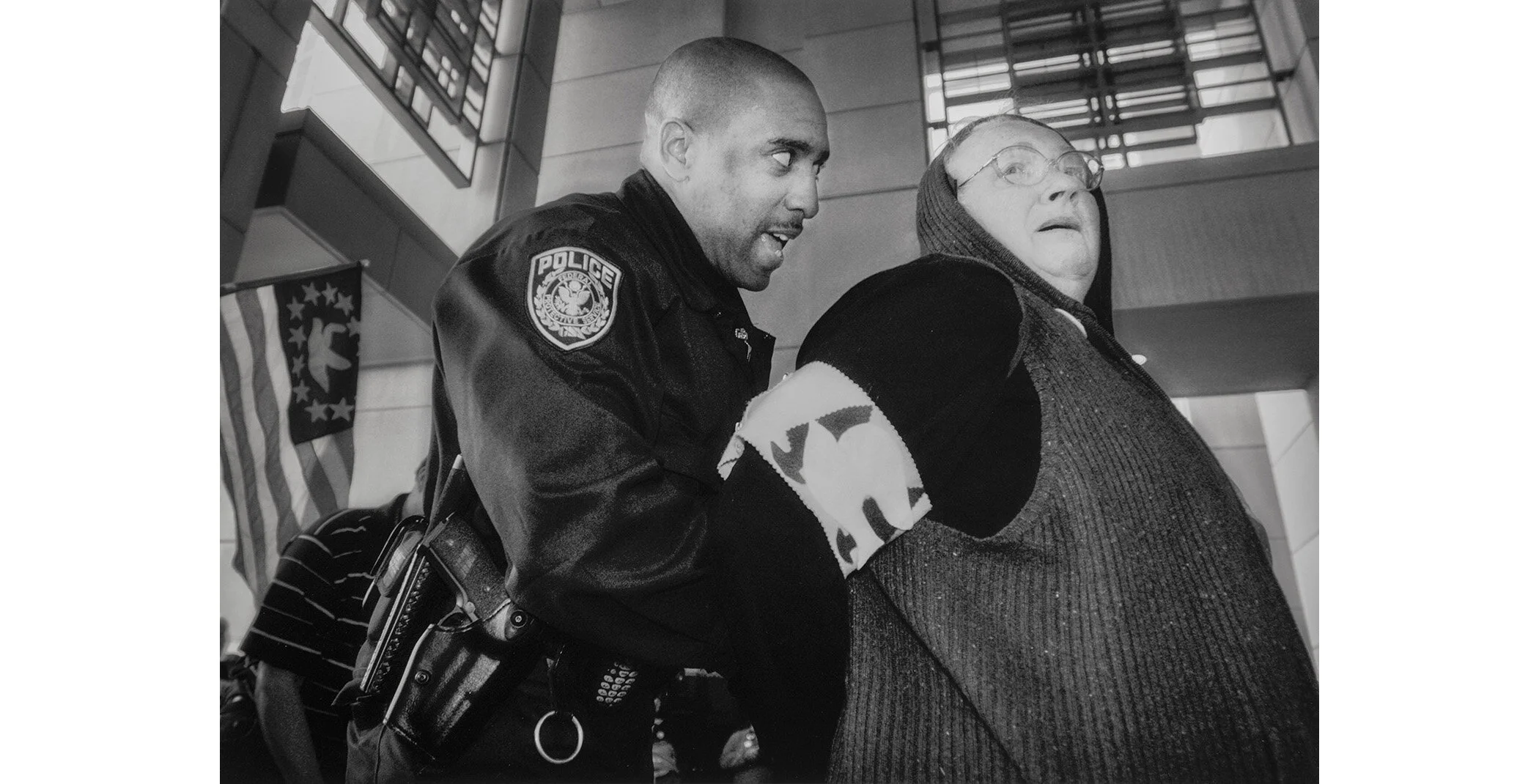
As the war drew nearer, the tactics of the movement attempting to stop it grew in intensity. In March, 2003, peace demonstrators attempted to block the entrance to the Federal Building in downtown Sacramento. An elderly woman, participating in her first act of civil disobedience, is arrested by Homeland Security officers.
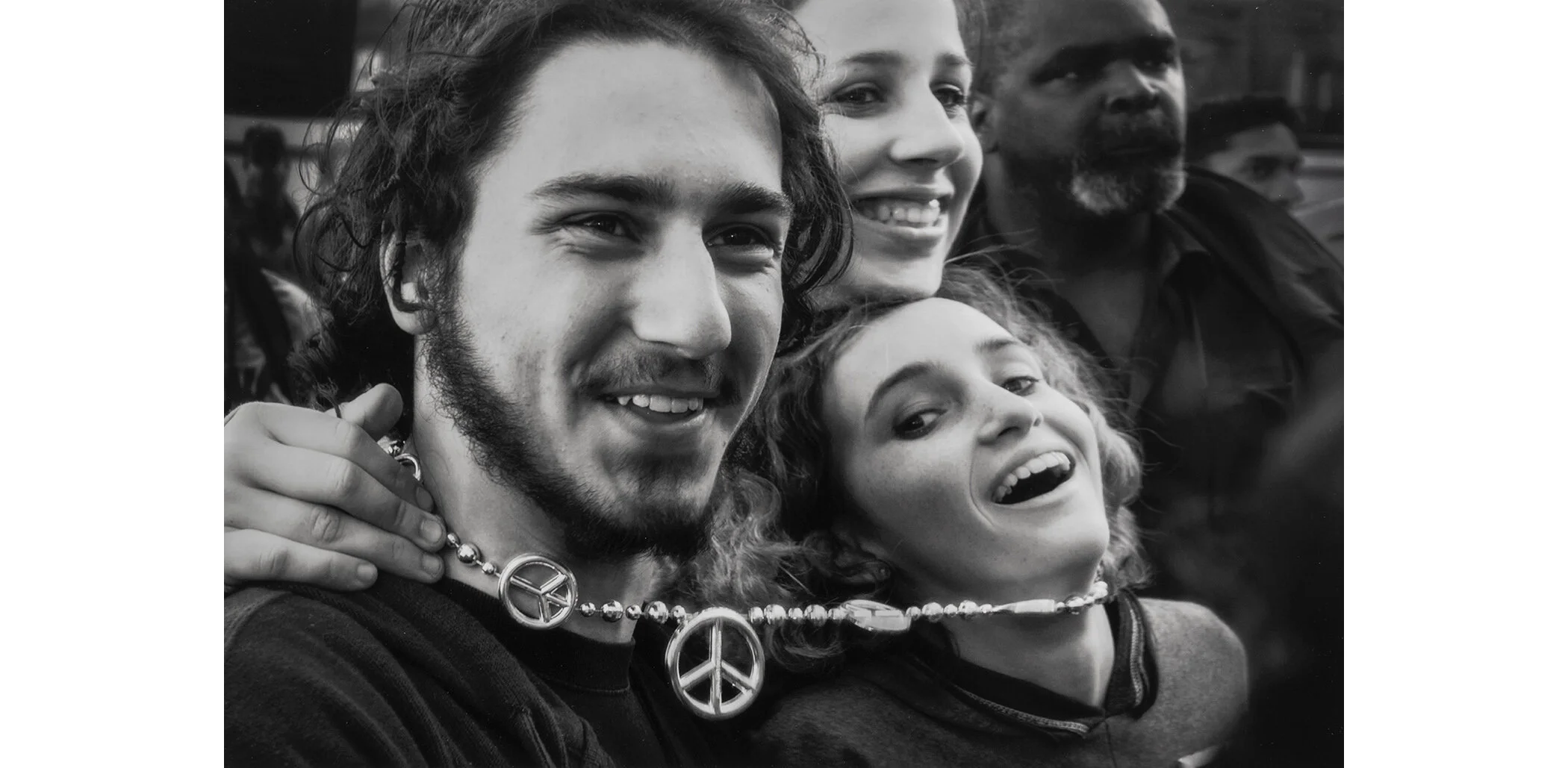
Three young peace marchers embrace near the end of a massive anti-war demonstration held in San Francisco in January, 2003. A festive air swept through the city that day. Jugglers and clowns, parents and children, friends and lovers, all gathered to speak out against the impending war. The old adage - “Make Love, not War” – had a tangible feel on that day.
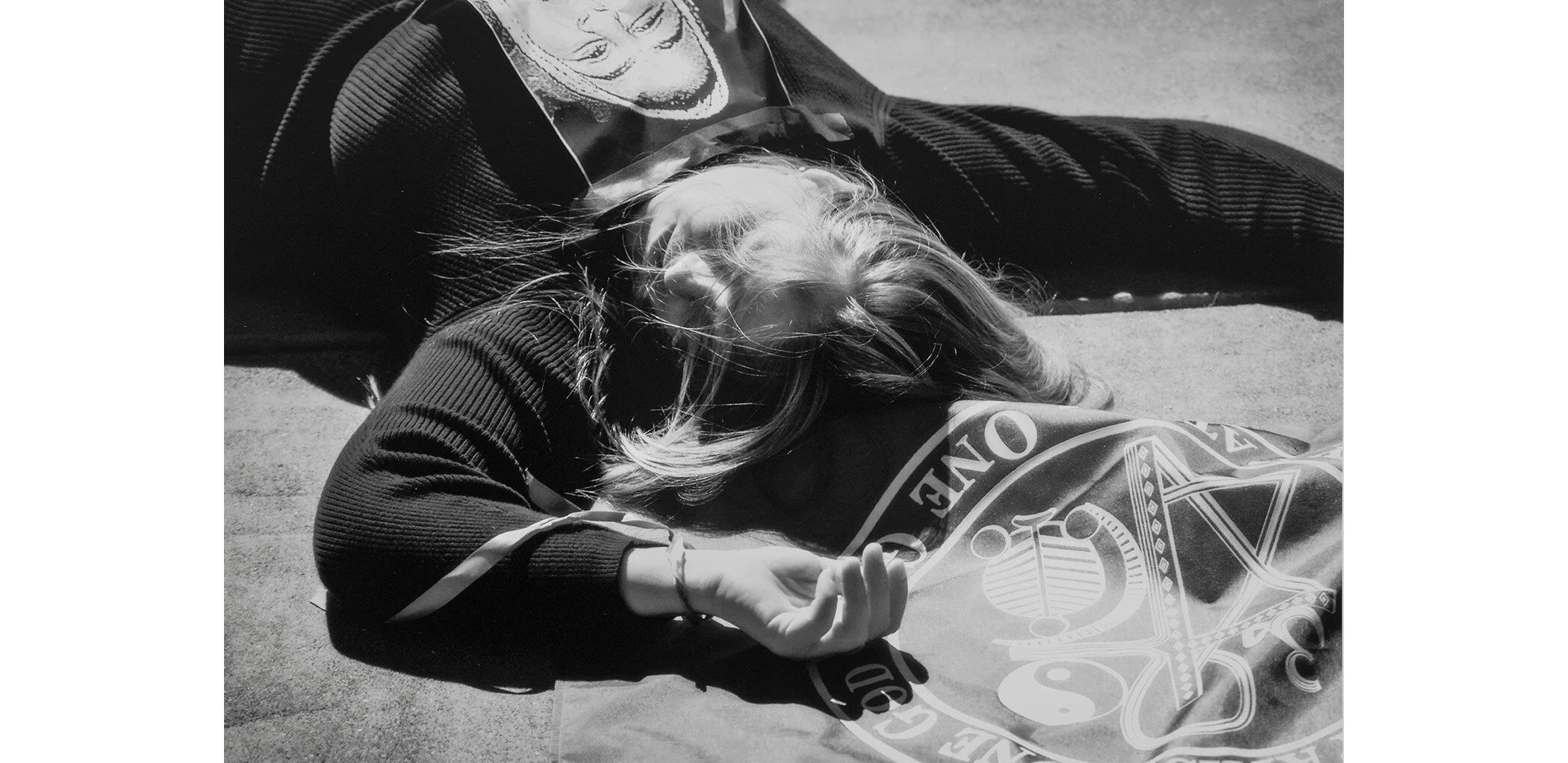
A last, desperate demonstration the day before the bombing of Iraq was to begin, March 18, 2003, Caesar Chavez Park, Sacramento. Organizers, their voices ragged from a week of almost non-stop demonstrations, shout into megaphones, orchestrating a vivid expression of dying in war. On signal, the entire crowd drops to the ground in mock death; mourners wail against the drone of police helicopters circling overhead.
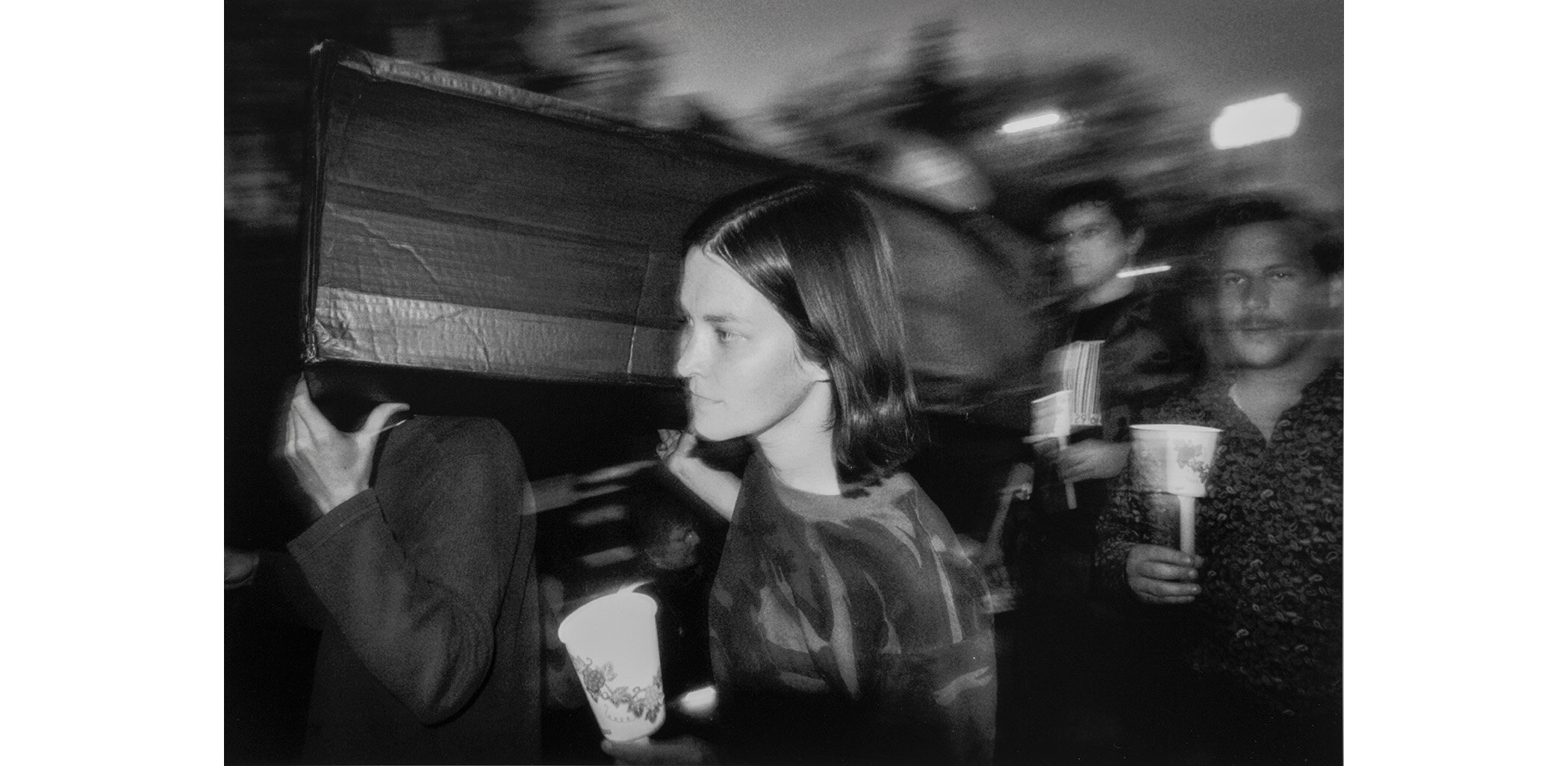
When the bombing of Iraq started, peace activists gathered at the corner of 16th & J Streets in downtown Sacramento for a candlelight vigil. The mood was somber. Despite massive numbers, the peace movement had failed to stop the war; the politicians were not listening to the people. A funereal pounding of drums wafted through the night.
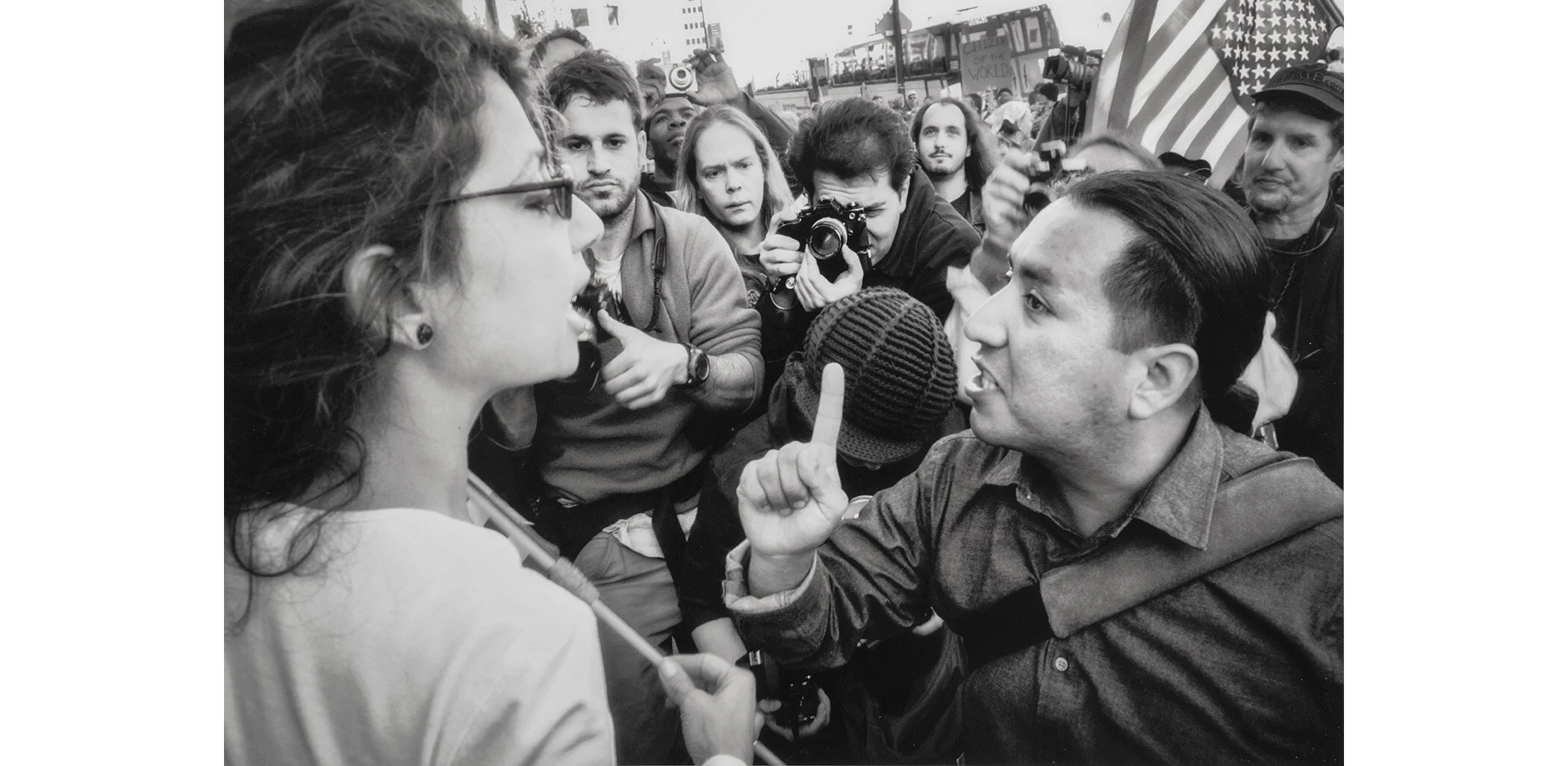
The war divided the country. Ideological fissures opened by the disputed presidential election a few years before now widened and deepened. A Vietnam veteran against the war confronts a flag-waving Bush supporter at a San Francisco demonstration. As the two shouted insults at each other, a bevy of photographers moved into a tight embrace. Society as spectacle; activists become actors on a media-driven stage.
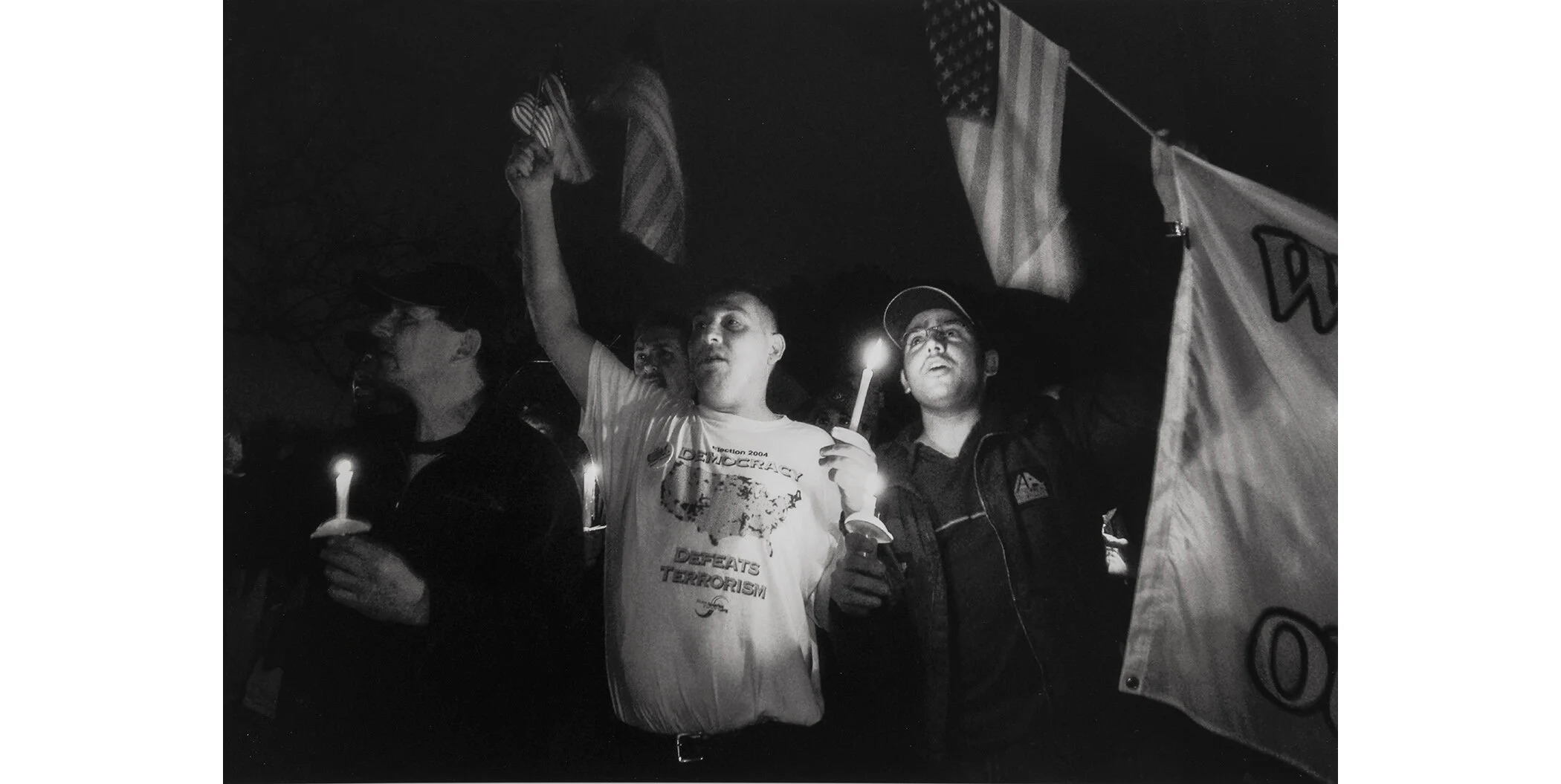
In February, 2005, a Sacramento couple hung an effigy of a dead U.S. soldier outside their midtown home in protest of the ongoing war in Iraq. This display of protest art created a firestorm. The effigy became a magnet that drew crowds of war supporters, their anger fueled by the ranting of local right-wing radio talk show hosts. In response, anti-war demonstrators showed up en masse to defend the couple’s home. Opposing candlelight vigils lasted deep into the night.
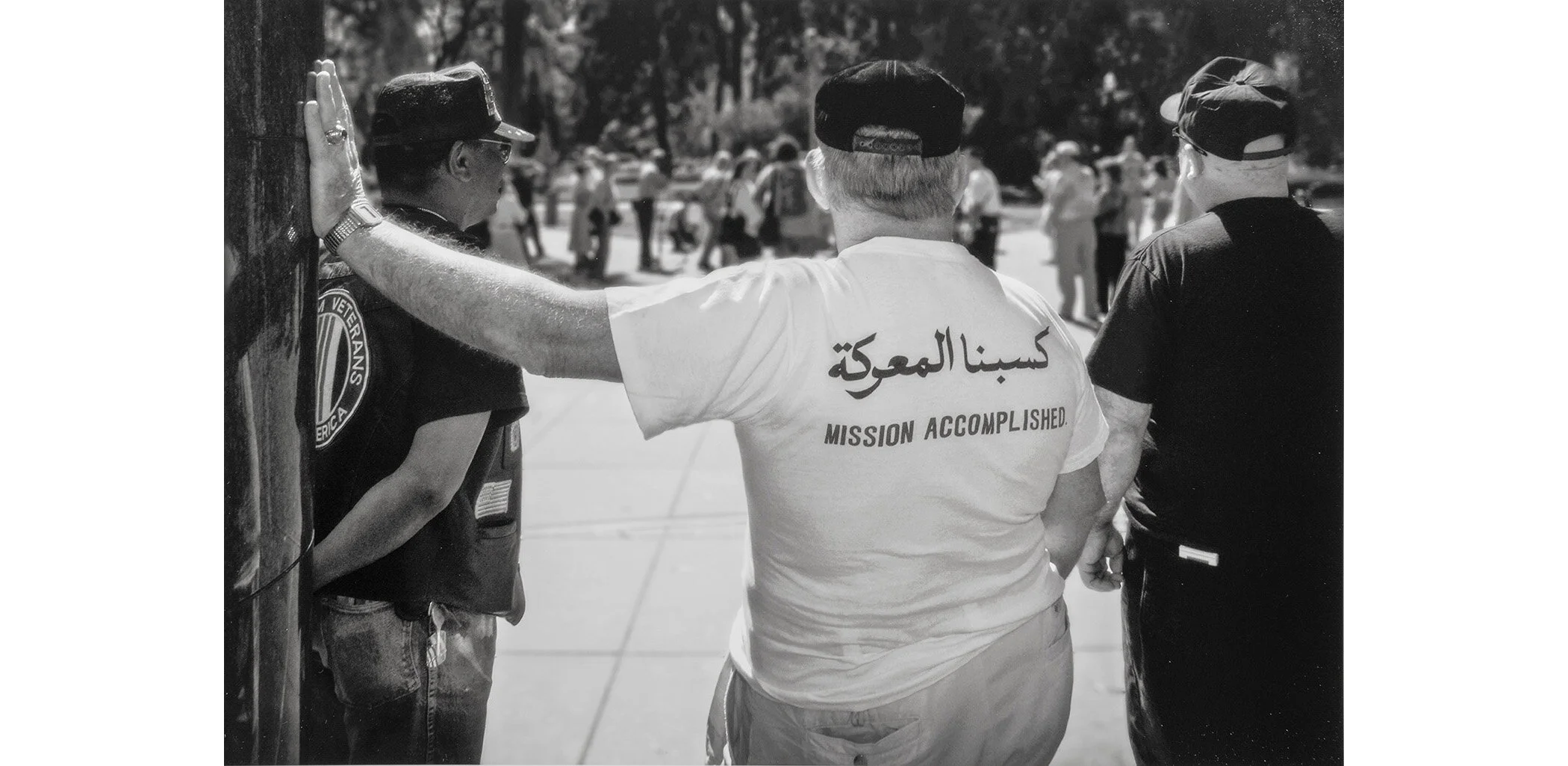
Three Vietnam-era veterans stand in front of the Vietnam Memorial in Capitol Park during an anti-war demonstration. The pro-war veterans insisted the demonstration be moved back away from the memorial entrance, while they stood guard in nonchalant silence.
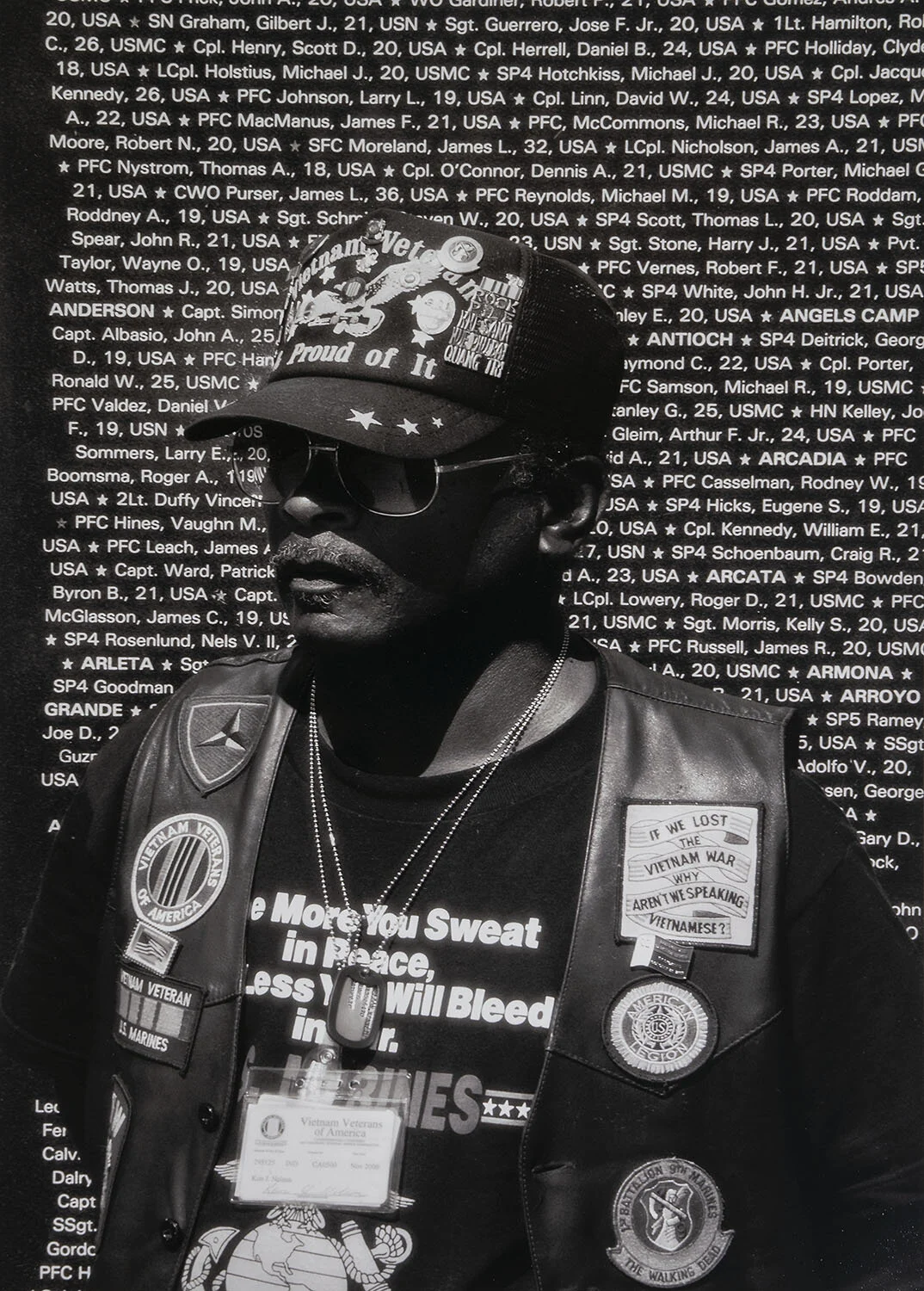
Ken Nelson, Vietnam Veteran. I asked him if I could take his picture. Reluctant at first, he finally agreed. “As long as you don’t misuse it,” he said. I promised I wouldn’t.
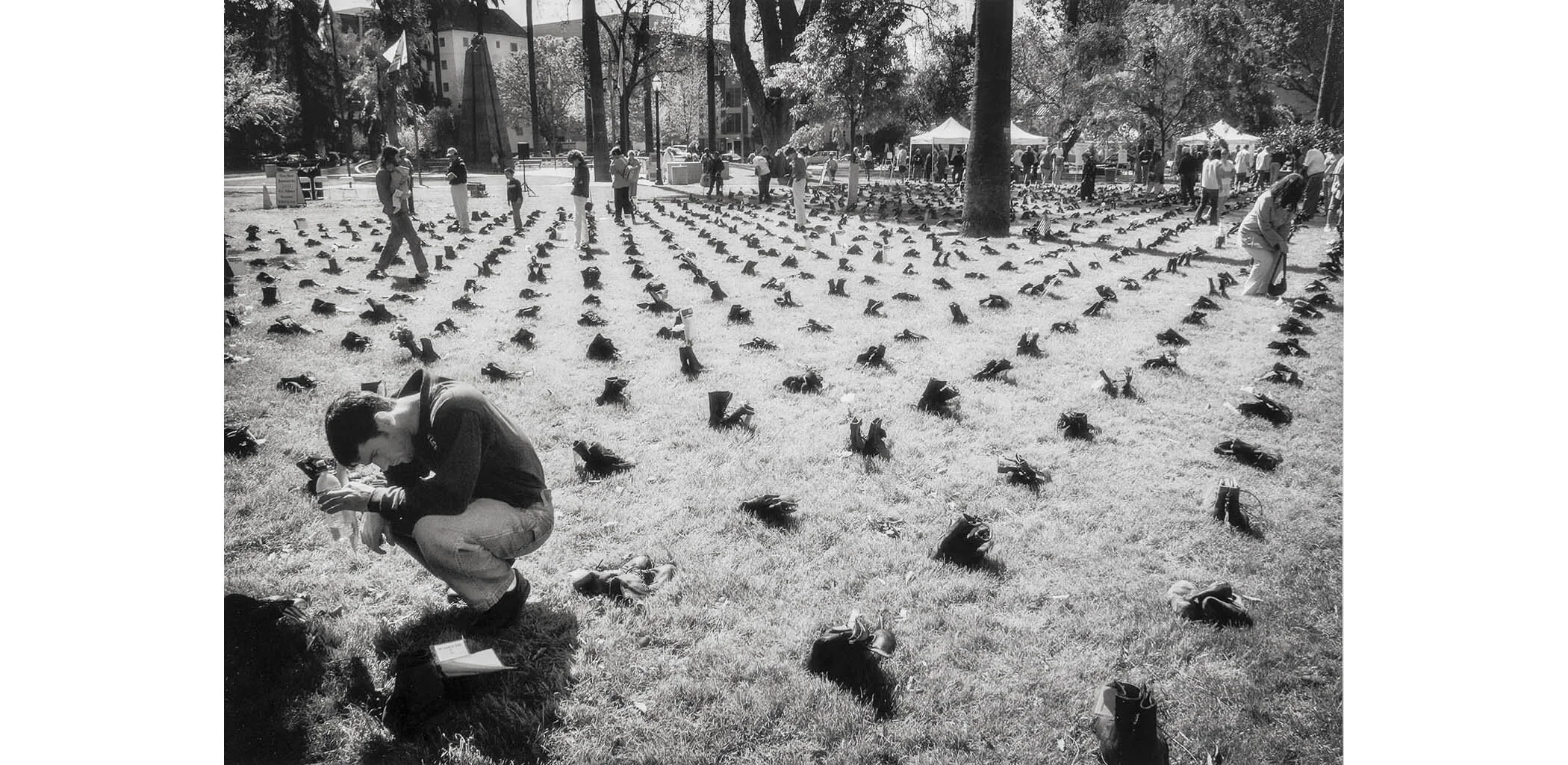
The Eyes Wide Open tour was designed to promote public awareness and reflection on the war. The most dramatic part of the exhibit was the placing, in strict military formation, of 2,000 pairs of combat boots representing the soldiers killed in the first two years of the war. Many of the boots were decorated with cards, photos and other mementos of the dead soldier. The display created a kind of sacred public space for meditation on the costs of the war.
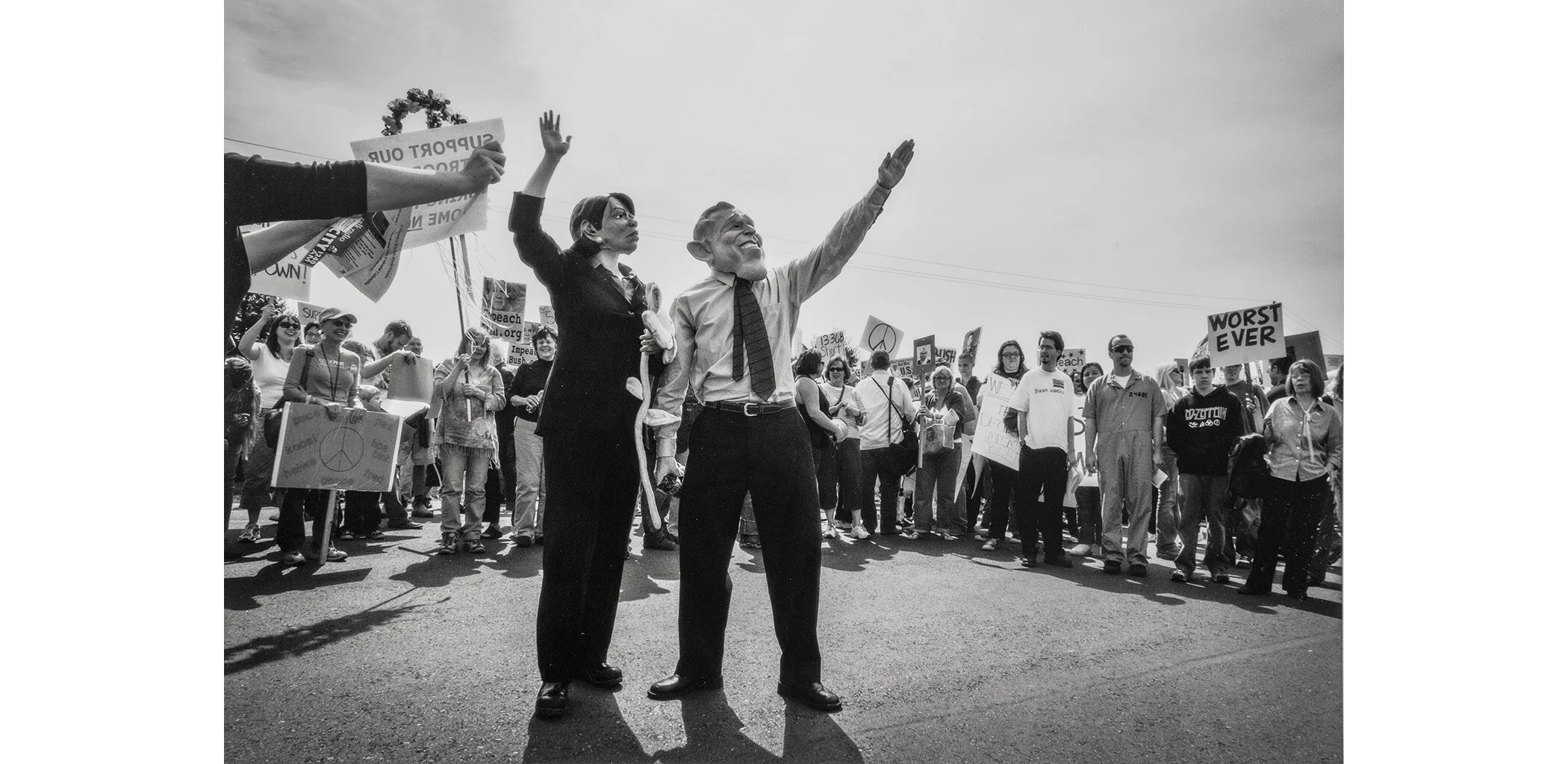
President Bush’s visit to West Sacramento in 2006 for a photo-op brought out a spirited crowd for a raucous greeting. The war had taken on a surreal aspect by this time and the masked street performers heightened the effect, waving to their “admirers” in studied oblivion to the messages of the signs. The politics of spin: wrong is right; truth is a lie; the end is in sight.